Stain or Paint? Choosing a Finish for Decks, Porches and Steps
The right finish depends on the wood, the traffic and the look you want, and the prep matters more than the product.
October 13, 2026 · 4 min read
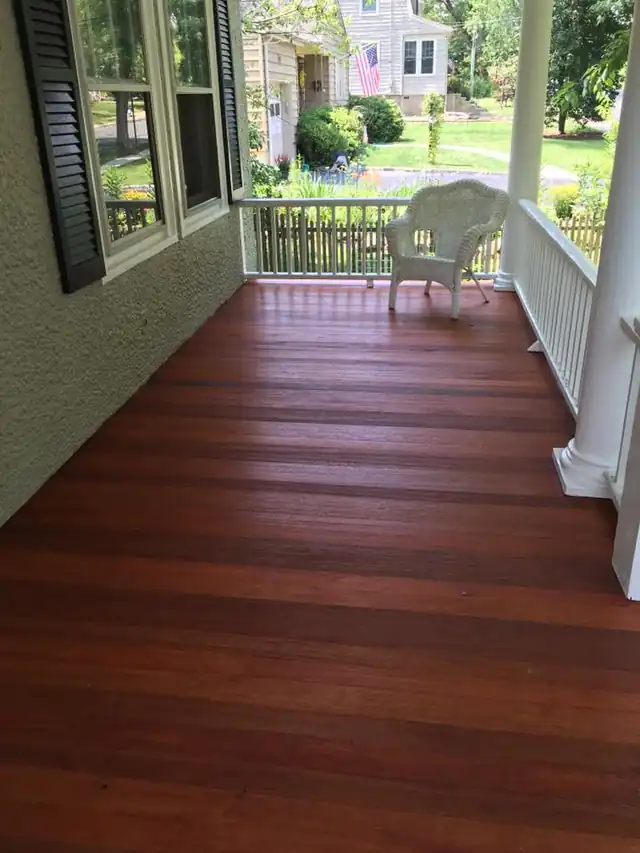
Decks, porch floors and front steps take a beating. Rain sits on them. Sun bakes them. Snow gets shoveled and salted. Feet, furniture, grills and planters grind away at them all year. The finish is the only thing between that punishment and the wood underneath, so choosing the right one, and applying it properly, matters more here than on almost any other surface at your house.
Mera Painting and Home Design does deck painting and staining for homeowners and property managers throughout New Jersey. The question we hear most is simple: stain or paint? Here's how to decide.
How stain and paint behave differently
A stain soaks into the wood. Depending on how much color it carries, it can leave the grain fully visible, show it through a tint, or cover most of it. Because it sits in the wood rather than on top, it doesn't build a thick film that can crack and peel in sheets. As it wears, it tends to fade and thin, which makes the next round easier: you clean the surface and refresh it, instead of scraping off a failed layer.
Paint forms a film on top of the surface. That film gives strong, even color and hides flaws like patched boards, mismatched wood and old stains. It also gives a smooth, uniform look that many people like on porch floors and steps. The tradeoff is that a film has edges. Where it fails, it chips and peels, and repairs mean scraping and sanding back to sound paint. A few rules of thumb:
- Choose stain if you want the grain to show and the wood to look like wood.
- Choose stain if you'd rather refresh the surface than scrape it.
- Choose paint if the boards are patched, mismatched or weathered beyond what stain can hide.
- Choose paint if you want a solid color, say a deep gray porch floor or a crisp white step.
- Choose either one only after the wood is clean, dry and sound.
Porch floors and steps are their own case
Horizontal surfaces that people walk on face different demands than a railing or a fence. Water pools on a porch floor and drains slowly. Steps wear fastest at the nosing, the front edge where every foot lands. Both get wet, and a wet painted surface can be slippery.
That's worth planning for. Painted porch floors and steps do best with a finish made for foot traffic. Ask your painter what suits the surface and how it will feel underfoot after rain. A penetrating stain leaves the wood's own texture in place, which many people find more forgiving, though it isn't a guarantee.
Color matters on a porch in particular, because the porch is part of how a house looks from the street. A mahogany stain on porch flooring warms up a front entry, and a painted floor in a deep tone can tie in with shutters or a front door.
Preparation decides the result
More than the product, prep determines how long the finish lasts. Outdoor wood collects dirt, mildew, old finish and moisture, and each one gets in the way.
- Clean the surface thoroughly, removing dirt, mildew and any loose, peeling finish.
- Let the wood dry completely before anything goes on.
- Replace or repair boards that are rotted, split or loose, and reset popped fasteners.
- Sand rough or raised spots so the surface is smooth and the old finish is dulled.
- Prime bare wood where the chosen finish calls for it.
- Apply thin, even coats rather than one thick one, with extra attention to board ends and edges.
Board ends and the gaps between boards are the weak spots. Water enters at the end grain like a straw. Getting finish into those areas makes a real difference.
Paint never adheres perfectly to a dirty surface, and that's doubly true outdoors. At Mera, we encourage customers to have surfaces power washed and then let them dry before we start. It's as true for a back deck as for a front porch.
Signs it's time to recoat
Finishes don't fail overnight. They give warnings, and catching them early means a lighter refresh instead of a full strip. Watch for these:
- Water soaks into the wood instead of beading on the surface.
- The color has faded, turned gray or looks patchy where the sun hits hardest.
- Paint is chipping, bubbling or peeling, especially along board edges.
- Traffic paths show worn-through spots, such as the middle of steps and the area in front of the door.
- Boards feel rough, fuzzy or splintery underfoot.
- Dark patches of mildew keep coming back after cleaning.
A simple test: sprinkle a little water on the boards. If it beads up, the finish is still working. If it darkens the wood and soaks in, start planning.
Keeping the finish going
Sweep regularly so grit doesn't grind the surface, and move planters now and then, because they trap moisture. Keep gutters and downspouts clear so water doesn't pour onto the steps, and trim plants that crowd the porch. In winter, shovel gently, and ask what de-icing products are safe for your finish.
If your deck, porch or steps are showing their age, call Mera Painting and Home Design at 973-885-1160 for a free estimate. We'll look at the wood, tell you whether stain or paint suits it, and lay out the plan. Every job we do comes with a warranty.
Mera Painting & Home Design, 973-885-1160
Call 973-885-1160More articles
Why Paint Fails on Dirty Siding, and What to Do Before the First Coat
A fresh coat is only as good as the surface under it, and most early paint failures start with dirt nobody saw.
What Lead-Safe Painting Looks Like in an Older New Jersey Home
Lead-safe work is mostly about dust: keeping it small, keeping it contained, and truly removing it at the end.