What Lead-Safe Painting Looks Like in an Older New Jersey Home
Lead-safe work is mostly about dust: keeping it small, keeping it contained, and truly removing it at the end.
October 13, 2026 · 4 min read
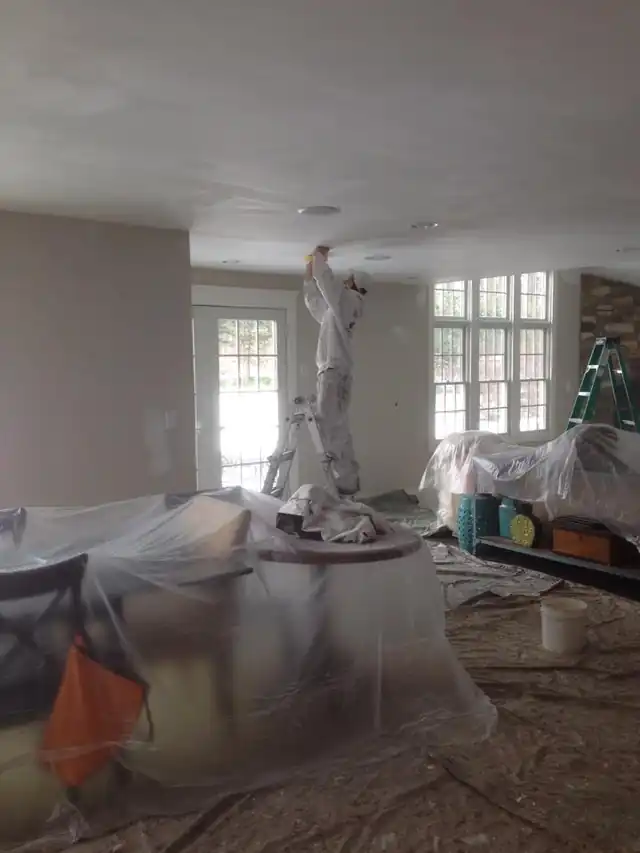
Old houses have character. They also have layers. Peel back a window casing in a New Jersey house that's been standing a long time and you may find five, six, seven coats of paint, each from a different decade and a different idea of what paint should contain. Some of those older layers may contain lead, and you can't tell by looking.
That doesn't make an older home off limits to painting. It means the way the work gets done matters more than usual. A lead-safe job is mostly about controlling dust: not creating more of it than necessary, keeping it in one place, and then truly removing it when the work is done. Here's what that looks like from the homeowner's side of the front door.
Why older homes call for a different approach
Sanding, scraping and demolition turn old paint into fine dust. In a newer house, that dust is a nuisance. In an older one, it may carry whatever was in the old coatings, and fine dust travels. It settles on window sills, floors, toys, pet bowls and kitchen counters.
This is why Mera Painting and Home Design is licensed, insured and EPA lead-safe certified (EPA Certification #NAT - 58518 - 1). The certification is about following specific work practices, including properly preparing for a renovation and following a specific cleaning protocol.
Preparation comes first
Most of what keeps a house clean happens before anyone picks up a scraper. Good preparation means thinking through where dust will go and then closing off those paths. On a typical older-home job, that includes steps like these:
- Moving furniture out of the work area, or into the center of the room and covering it completely.
- Covering floors with heavy protective sheeting, taped down at the edges so nothing slips underneath.
- Closing and covering doors, vents and openings that could carry dust into other parts of the house.
- Setting up a clear path in and out so workers aren't tracking dust through the whole house.
- Telling the household which rooms are off limits while work is under way.
It's slow, unglamorous work, and it's the difference between a contained job and one where the dust finds the nursery.
Working so the dust stays small
During the work itself, the aim is to disturb as little old paint as possible. That often means gentle hand scraping of only the loose, failing areas rather than aggressive sanding of everything, and keeping surfaces lightly misted where that's practical so particles stay put instead of floating.
Debris should be collected as the work goes, not left to pile up. Painters working in a lead-safe way stop and tidy as they go, bagging chips and dust instead of sweeping them, because sweeping sends fine particles right back into the air.
The cleanup protocol
Cleanup is where a lead-safe job earns its name. Mera's protocol is specific: we use HEPA vacuums to clean up dust and debris on all surfaces. The vacuuming is followed by wet wiping and wet mopping with plenty of rinse water.
Each part of that has a reason. An ordinary household vacuum can pull fine dust in one end and push it out the other. A HEPA vacuum has a filter built to hold onto very small particles, so the dust stays in the machine instead of going back into the room. Wet wiping picks up what the vacuum missed from sills, ledges and trim. Wet mopping does the same on the floor.
The rinse water matters more than people expect. One dirty bucket of water just smears fine dust around, while fresh, frequent rinses carry it away. A surface that looks clean isn't necessarily clean, which is why the method is the standard, rather than a quick sweep and a glance.
Questions worth asking any contractor
Whether you hire Mera or someone else, a handful of questions will tell you a lot before work starts on an older house.
- Are you lead-safe certified, and can I see your certification number?
- How will you protect floors, furniture and the rest of the house from dust?
- What does your cleanup involve, and do you use HEPA vacuums?
- Do you wet wipe and wet mop, or do you sweep?
- Who will be on site, and who is responsible for cleanup at the end of each day?
A contractor with a real process answers these without hesitation. If the answers go vague, that's information too. Ask any painter whether they're lead-safe certified before they touch an older home, and if the answer matters to you, ask to have it written into the estimate.
Living in the house during the work
A few practical habits help households. Keep kids and pets out of the work area, and keep their toys and bowls out of the rooms being worked on. Take shoes off at the door near the work zones. Wash hands before eating.
If something looks wrong, such as visible chips on the floor or dust on a surface the crew already finished, say so right away. A good crew would rather hear it at once than discover it at the final walk through.
If you own or manage an older home or building in New Jersey and you're planning to paint, call Mera Painting and Home Design at 973-885-1160 for a free estimate. We'll talk through the prep before anyone opens a can.
Mera Painting & Home Design, 973-885-1160
Call 973-885-1160More articles
Why Paint Fails on Dirty Siding, and What to Do Before the First Coat
A fresh coat is only as good as the surface under it, and most early paint failures start with dirt nobody saw.
Refinish or Replace: Deciding What to Do With Tired Kitchen Cabinets
Often the cabinet boxes are fine and only the surface is tired, which is good news for your kitchen and your budget.