Wallpaper Removal and Hanging: What to Expect From Start to Finish
From the first scrape to the last seam, here is how good wallpaper work gets done.
October 13, 2026 · 4 min read
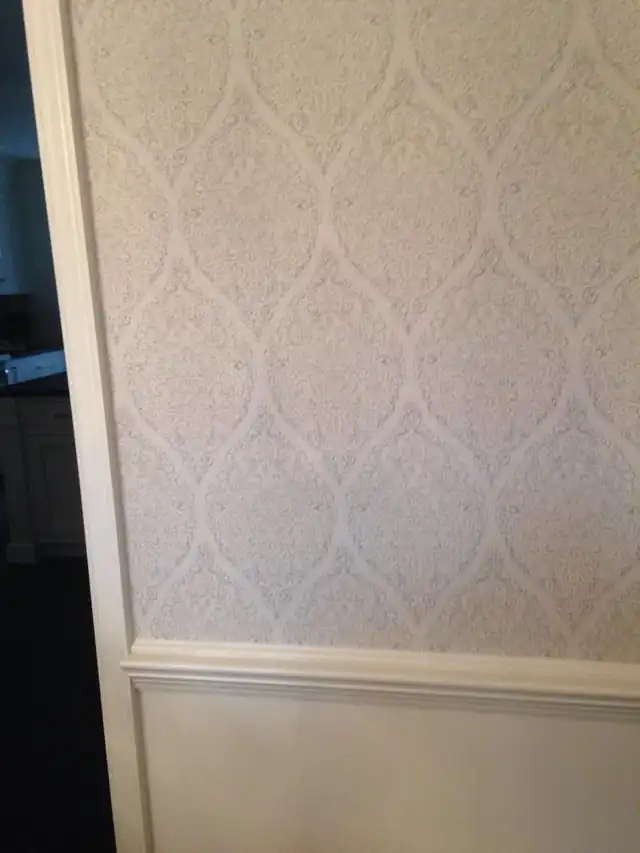
Wallpaper has had a second life. Bold botanical prints, woven textures and soft geometrics are back, and people who once swore never again are hanging it on purpose. It's also true that the paper already on your walls may be older than your mortgage, curling at the seams and stained by who knows what. Taking old paper down and putting new paper up are two different jobs, and it helps to know how each one goes.
Mera Painting and Home Design handles wallpaper installation and removal, along with custom walls and decals, alongside our painting work. Here's what to expect.
Taking old wallpaper down
Removal is the part nobody looks forward to, and the part where shortcuts do the most damage. Old paper is held by adhesive, and sometimes by paint that was rolled over the paper itself. The method depends on the kind of paper. Some papers peel off dry in whole sheets and leave a backing behind. Others need to be scored and soaked so water can reach the adhesive, then loosened with a scraper.
The goal is to remove the paper and the glue without tearing into the drywall or plaster underneath. Torn wall facing, gouges and soaked-through wallboard all become repairs later. Careful, patient scraping with the right tool and a light hand protects the wall you're going to live with.
The wall prep nobody sees
After the paper comes off, there's usually a film of leftover adhesive on the wall. It has to be washed away completely. Paste residue left behind can bleed through new paint, stop new paper from bonding, or leave a texture you'll notice every time the afternoon light rakes across the wall. Here's the usual sequence:
- Wash the wall to remove all adhesive residue, then let it dry fully.
- Fill holes, gouges and torn spots with compound, then sand smooth.
- Check for moisture stains or mildew, and fix the source before covering anything.
- Prime with a coat suited to what's going back on, paint or paper.
- Mark a plumb guide line so the first strip hangs true.
That last item matters more than people expect. Few walls in older homes are perfectly square, and ceilings slope. Hanging the first strip against a true vertical line, rather than against a corner or the ceiling, keeps every strip after it straight.
Hanging new paper and matching the pattern
Pattern matching is where wallpaper hanging turns into a craft. Most printed papers have a repeat, which is the distance before the design starts over. Strips have to line up so the design flows from one to the next, and how they line up depends on the paper. A straight match repeats at the same height across the roll. A drop match shifts every other strip, so the pattern steps down diagonally.
Good work begins with planning, before any paste goes on. The paperhanger measures wall height, works out where the pattern will land at the ceiling and where it will start in the corner, and decides where seams will fall so they don't split a window or a centerpiece motif awkwardly. Cutting from the roll in the right order, and checking that the rolls come from the same batch, keeps slight color differences from showing up on the wall.
Then comes smoothing each strip to push out air, trimming at the ceiling and baseboards and around switches, and wiping paste off the face before it dries. Corners and outlets take the most time, and they're where you can tell a careful hand from a rushed one.
Custom walls and decals
Not every wall wants an all-over print. Custom walls and decals give you more control: a single accent wall, a mural behind a bed, a graphic in a child's room, lettering in an office reception area, a feature panel in a restaurant or shop. Because they're custom, the surface and the layout need to be planned together.
The wall underneath matters as much as the graphic. A smooth, clean, properly primed surface lets a decal sit flat, while a textured wall, or paint that hasn't fully dried, can cause trouble. The fixed things in the room, such as light switches, windows and big furniture, tell you where a design should sit. A good installer measures and test-fits before committing, and talks through what removal will look like down the road.
These options suit businesses as well as homes. Mera works with residential and commercial customers, from living rooms to offices.
Choosing between paper and paint
Paper adds depth and pattern that paint can't, and it can soften a wall that's less than perfect. But it's a bigger commitment to change later. If you love a pattern and you're staying put, paper earns its place. If you rearrange often, or you just want something quieter, paint may suit you better. Our Color Consultants can help you picture both.
Before you decide, tape a sample to the wall for a few days. Light changes everything. A pattern that looks calm in a showroom can feel loud across a whole room.
If you're thinking about wallpaper, whether it's coming down or going up, call Mera Painting and Home Design at 973-885-1160 for a free estimate. We'll look at the walls, talk through the options and give you a straight plan.
Mera Painting & Home Design, 973-885-1160
Call 973-885-1160More articles
Why Paint Fails on Dirty Siding, and What to Do Before the First Coat
A fresh coat is only as good as the surface under it, and most early paint failures start with dirt nobody saw.
What Lead-Safe Painting Looks Like in an Older New Jersey Home
Lead-safe work is mostly about dust: keeping it small, keeping it contained, and truly removing it at the end.